Run the depot, not just the spreadsheet.
RapidData's Depot Management System digitises the whole depot — fleet, bays, crews, maintenance, fuel and energy, and dispatch — and connects it to a smart transit layer, so operators get real-time visibility, fewer missed services, and lower cost per kilometre across every depot in the network.

One platform for the depot and the network it feeds.
A bus depot is dense and unforgiving — hundreds of vehicles, mixed fuel and energy types, rotating crews, finite bays, and a daily service plan that must be met. RapidData's Depot Management System digitises the depot end to end and ties it to a smart transit layer, so the depot and the network it feeds run as one real-time system.
Fleet & Vehicle Management
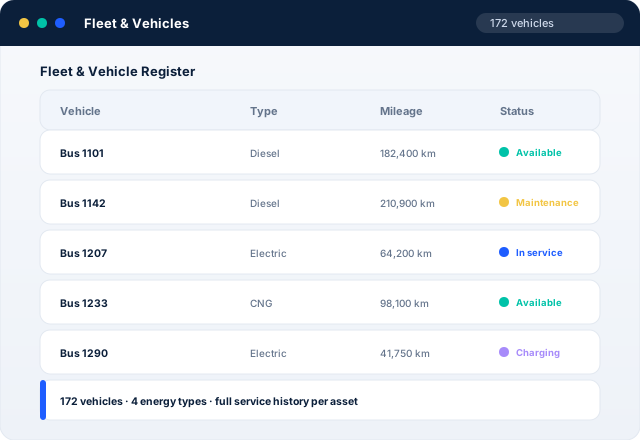
Track every vehicle in one register — status, configuration, mileage, energy type and full service history — across diesel, CNG and electric fleets.
- ✓Single fleet register
- ✓Full service history
- ✓Mixed-fleet ready
- ✓Asset lifecycle
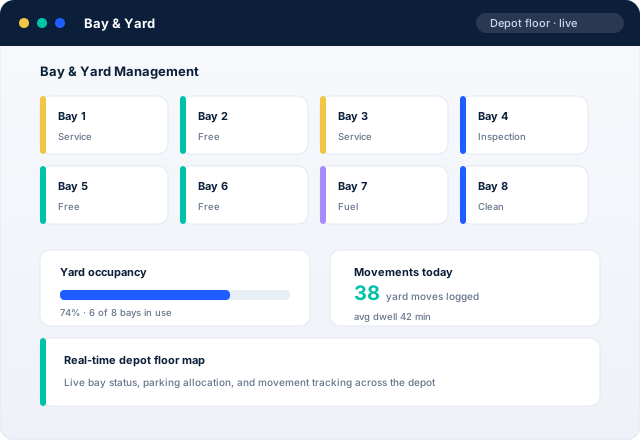
Bay & Yard Management
Allocate maintenance and parking bays, manage yard movements, and see live depot occupancy on a real-time floor map.
- ✓Bay allocation
- ✓Live floor map
- ✓Yard movements
- ✓Occupancy analytics
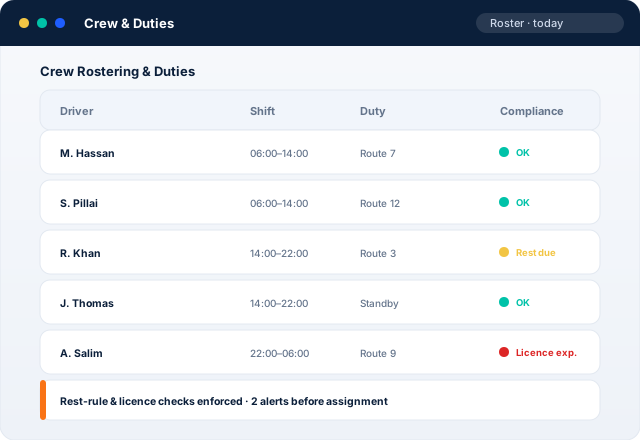
Crew Rostering & Duties
Roster crews and allocate duties against the service plan, with licences, certifications and rest-rule compliance enforced before assignment.
- ✓Shift rostering
- ✓Duty allocation
- ✓Compliance checks
- ✓Attendance
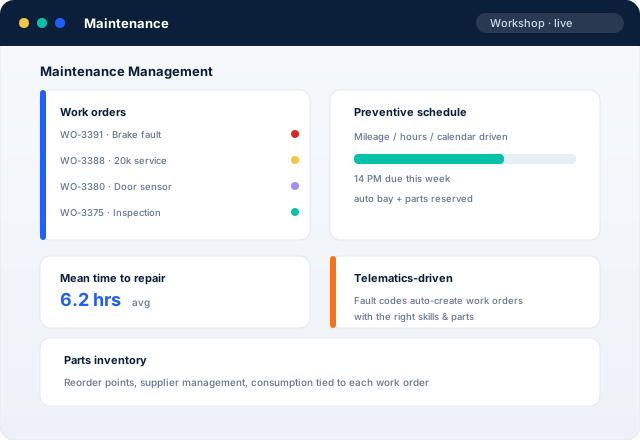
Maintenance Management
Run preventive maintenance by mileage, hours or calendar, and capture breakdowns and telematics fault codes as work orders routed to the workshop with the right parts and skills.
- ✓Preventive maintenance
- ✓Breakdown & defects
- ✓Parts & inventory
- ✓Bay scheduling
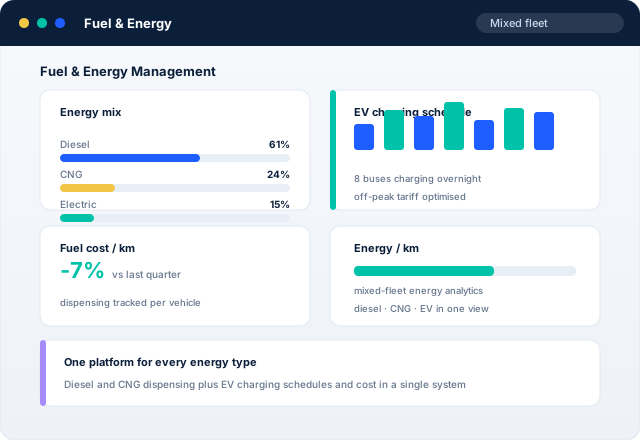
Fuel & Energy Management
Manage diesel and CNG dispensing alongside EV charging schedules and energy cost — every energy type for a mixed fleet in one place.
- ✓Diesel & CNG dispensing
- ✓EV charging schedules
- ✓Energy cost per km
- ✓Sustainability analytics
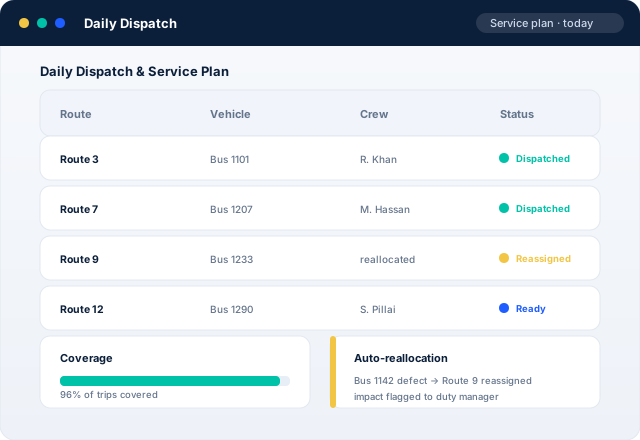
Daily Dispatch & Service Plan
Allocate vehicles and crews to the daily service plan and auto-reallocate when a defect or absence threatens a trip — with impact flagged to the duty manager.
- ✓Service-plan allocation
- ✓Auto-reallocation
- ✓Readiness tracking
- ✓Coverage KPIs
Smart Transit & Network Analytics
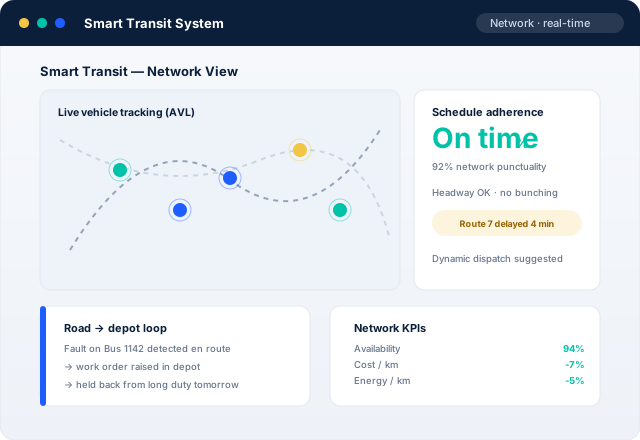
Extend the depot into the network — live AVL tracking, schedule-adherence monitoring, dynamic dispatch, and a closed road-to-workshop loop, with analytics across the whole network.
- ✓Real-time AVL tracking
- ✓Schedule adherence
- ✓Dynamic dispatch
- ✓Network analytics
- ✓ITS & ticketing integration
Built for the audit, not the demo.
Cloud-native or sovereign
Container-first and multi-region. Deploy on AWS, Azure, GCP, OCI, your own data centre, or a sovereign-cloud region.
Open and composable
API-first with REST, GraphQL, and webhooks. Integrates with ITS, AVL/GPS, fare collection, telematics, and ERP.
EV and mixed-fleet ready
Manage diesel, CNG, and electric fleets together, including charging schedules, energy cost, and range planning.
Outcomes you can hold us to — by horizon.
Foundations
Stand up one depot — fleet register, bays, crews, maintenance, and daily dispatch — live in production with a baseline of availability and cost per km.
Scale
Roll out across additional depots, switch on the smart transit layer and AVL integration, and migrate maintenance and parts data.
Run & optimise
Network-wide managed run with named SLOs, energy and reliability optimisation, and quarterly performance reviews.
Three commercial models. One outcome standard.
We avoid open-ended retainers. Every model names its outcome and its measurement window in the contract.
Fixed-price diagnostic
2–4 week engagement. Outcome tree, baseline metrics, prioritised value pools, and a board-ready 18-month roadmap. Stop-go decision in week 4.
Outcome-linked pilot
8–12 week engagement to ship one value pool, end-to-end, with a measurable KPI commitment. Joint squads with the client team. Live-parallel before cutover.
Programme + managed run
Multi-quarter scale-out with managed services on top. Quarterly value reviews. SLO-tied annual incentive. Capability transfer by design.
Frequently asked questions
What is a Depot Management System? +
A Depot Management System digitises bus depot operations — fleet and bay management, crew scheduling, maintenance, fuel and energy, parts inventory, and daily dispatch — and connects it to a smart transit layer for real-time network visibility. RapidData's platform covers both bus depot management and the smart transit system on top of it.
Does it support electric (EV) buses? +
Yes. The platform manages diesel, CNG, and electric fleets together, including EV charging schedules, energy cost tracking, and range-aware allocation, so mixed fleets are run from one system.
How does it integrate with our ITS and ticketing systems? +
It is API-first with REST, GraphQL, and webhooks, and integrates with intelligent transport systems (ITS), automatic fare collection, AVL/GPS, telematics, and ERP.
Can it run multiple depots? +
Yes. The system is multi-depot by design, with per-depot operations and network-wide roll-up reporting across the whole authority or operator.
How does maintenance work? +
Preventive maintenance is driven by mileage, hours, or calendar with auto-generated work orders, parts reservation, and bay scheduling. Breakdown and defect maintenance is captured from driver reports and telematics fault codes and routed to the workshop.
Can it run on-prem or in a sovereign cloud? +
Yes. The platform is container-first and deployable on AWS, Azure, GCP, OCI, your own data centre, or a sovereign-cloud region.
What outcomes can we expect? +
Operators typically target higher fleet availability, fewer missed services, lower overtime, and reduced cost and energy per kilometre. We baseline these at the start and report against them.
How is it priced? +
Pricing is per-depot and per-fleet-size with volume tiers. Contact us for a tailored enterprise quote.
Related RapidData products.
See Depot Management System on your data, in 30 minutes.
A platform partner walks you through the relevant capability — and answers the hard procurement questions.